Roofing Built to Outlast Extreme Conditions
Metal Roofing in Terrebonne for properties requiring long-term durability, fire resistance, and minimal maintenance
Central Oregon's combination of intense summer sun, winter freeze-thaw cycles, and wildfire risk makes metal roofing a functional choice for homeowners prioritizing longevity and weather resilience over frequent replacement intervals. Metal systems installed by Lift & Relay Construction LLC resist ignition from airborne embers, shed snow without the granule degradation that affects asphalt shingles, and maintain structural integrity through decades of thermal expansion and contraction. The material doesn't crack, curl, or lose protective coatings the way organic-based products do, and it requires no periodic treatment or resealing to remain weather-tight.
Professional installation accounts for the specific fastening schedules and expansion joint requirements that allow metal panels to move with temperature swings without creating stress points or loosening connections. Panels are available in standing seam profiles that conceal all fasteners beneath raised ribs, and in ribbed or corrugated styles that offer different aesthetic appearances and load-bearing characteristics. Color-coated finishes reflect solar heat more effectively than dark asphalt surfaces, reducing attic temperatures and the cooling load during summer months when daytime highs regularly exceed 90 degrees across the region.
Request a metal roofing consultation to review panel styles, finish options, and how installation methods differ from shingle applications.
How Metal Roofing Handles Changing Climate Demands
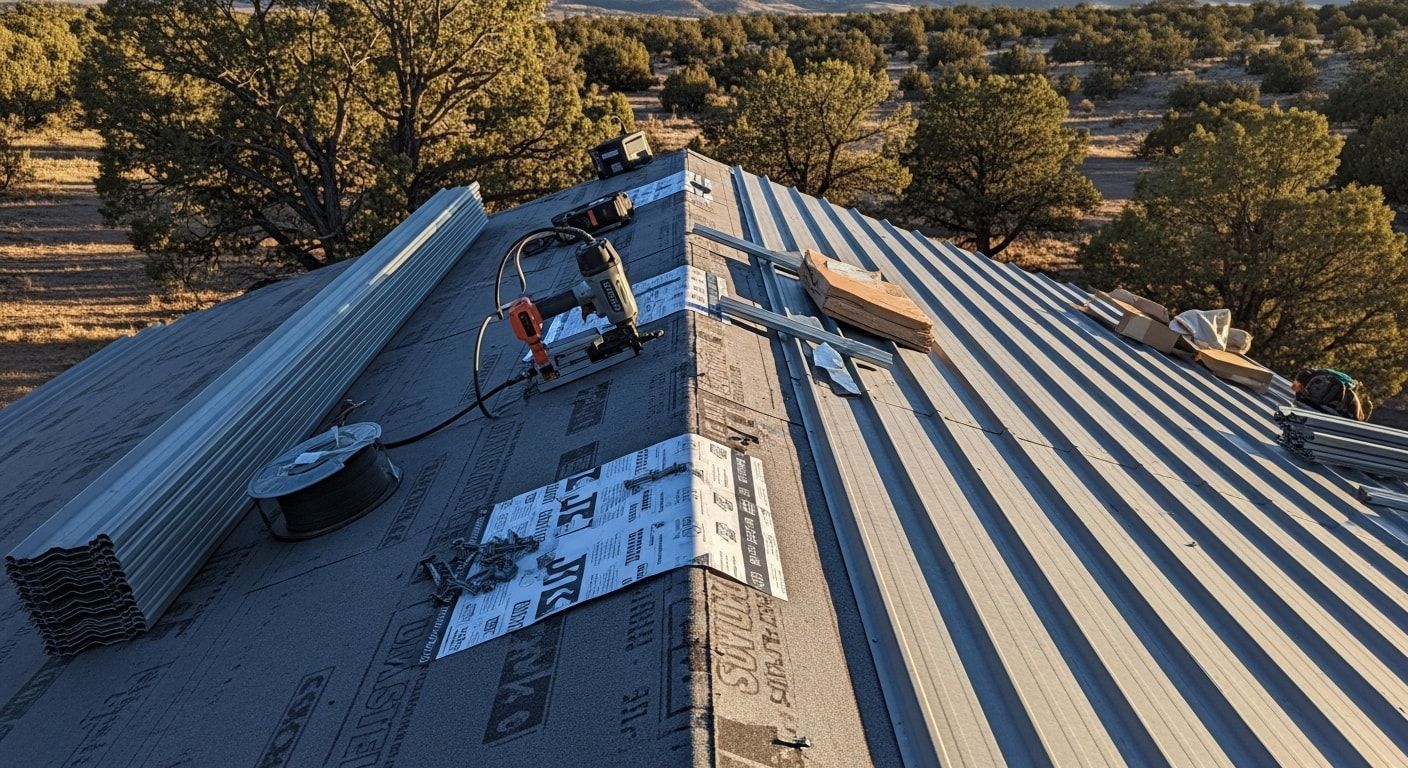
Metal panels interlock or overlap at seams with sealant and concealed fasteners that prevent water infiltration even during wind-driven rain, and the smooth surface allows snow and ice to slide free rather than accumulating in thick layers that stress the roof structure. Installation includes properly detailed flashing at all roof penetrations and edges, with closures and trims fabricated to match the panel profile so that no gaps exist where weather can penetrate. Underlayment beneath the metal provides a secondary moisture barrier and reduces noise from rain impact, while the air gap between panels and decking promotes ventilation that keeps the roof deck dry.
Once installed, you'll see that the roof surface remains uniform without the organic growth, streaking, or granule loss common to shingle systems, and the home's exterior appearance gains the clean lines and dimensional texture that metal profiles provide. Energy costs may decrease as reflected solar heat reduces the thermal load transferred through the attic space, particularly noticeable in homes with lighter-colored metal finishes. The system requires only occasional inspection to verify that fasteners remain tight and that no debris has accumulated in valleys or behind trim pieces.
Metal roofing installations meet fire hardening codes that regulate ignition resistance in areas where wildfire exposure has been documented, and the non-combustible material provides a layer of protection when embers land during nearby burn events. Workmanship warranties cover installation quality including fastener placement, panel alignment, and flashing integration, while material warranties from manufacturers address coating performance and panel integrity over time frames that often extend thirty years or more.
What Property Owners Usually Ask
Homeowners considering metal roofing want to understand performance differences, installation complexity, and how the material responds to local weather patterns.
What makes metal roofing suitable for Central Oregon's climate compared to other regions?
The material's ability to shed snow, resist UV degradation at high elevations, and maintain fire resistance during wildfire season addresses specific regional risks, while the low moisture retention prevents the freeze-thaw damage that shortens the life of water-absorbent materials.
How is metal roofing attached to prevent wind uplift and thermal movement issues?
Panels are fastened through pre-drilled holes into solid decking using screws with neoprene washers that seal around the penetration, and standing seam systems use concealed clips that allow lateral movement while maintaining vertical hold-down strength against wind forces.
Does metal roofing create noise problems during rainstorms or hail events?
Underlayment and attic insulation dampen most sound transmission, and the noise level inside a properly insulated home with metal roofing remains comparable to shingle systems, though uninsulated structures or those with minimal underlayment will transmit more audible impact from precipitation.
What styles and colors are available to match different home designs?
Options range from standing seam profiles that suit contemporary architecture to ribbed panels and stamped metal shingles that replicate traditional shake or tile appearances, with color selections spanning earth tones, grays, and metallics that coordinate with siding and trim finishes.
How long does metal roofing installation take compared to shingle replacement?
Metal installations often require additional time for panel cutting, trim fabrication, and precise fastener placement, typically extending the project timeline by one to three days depending on roof complexity and the number of penetrations requiring custom flashing details.
Lift & Relay Construction LLC provides experienced installation crews trained in metal roofing techniques and familiar with the fastening standards that ensure long-term performance through Terrebonne's seasonal weather variations. Schedule an estimate to see panel samples, discuss finish durability, and review how metal roofing addresses your property's specific exposure conditions.