
Low-Slope Systems Engineered for Weather Sealing
TPO Roofing in Terrebonne for flat and low-slope applications requiring energy efficiency and reliable water shedding
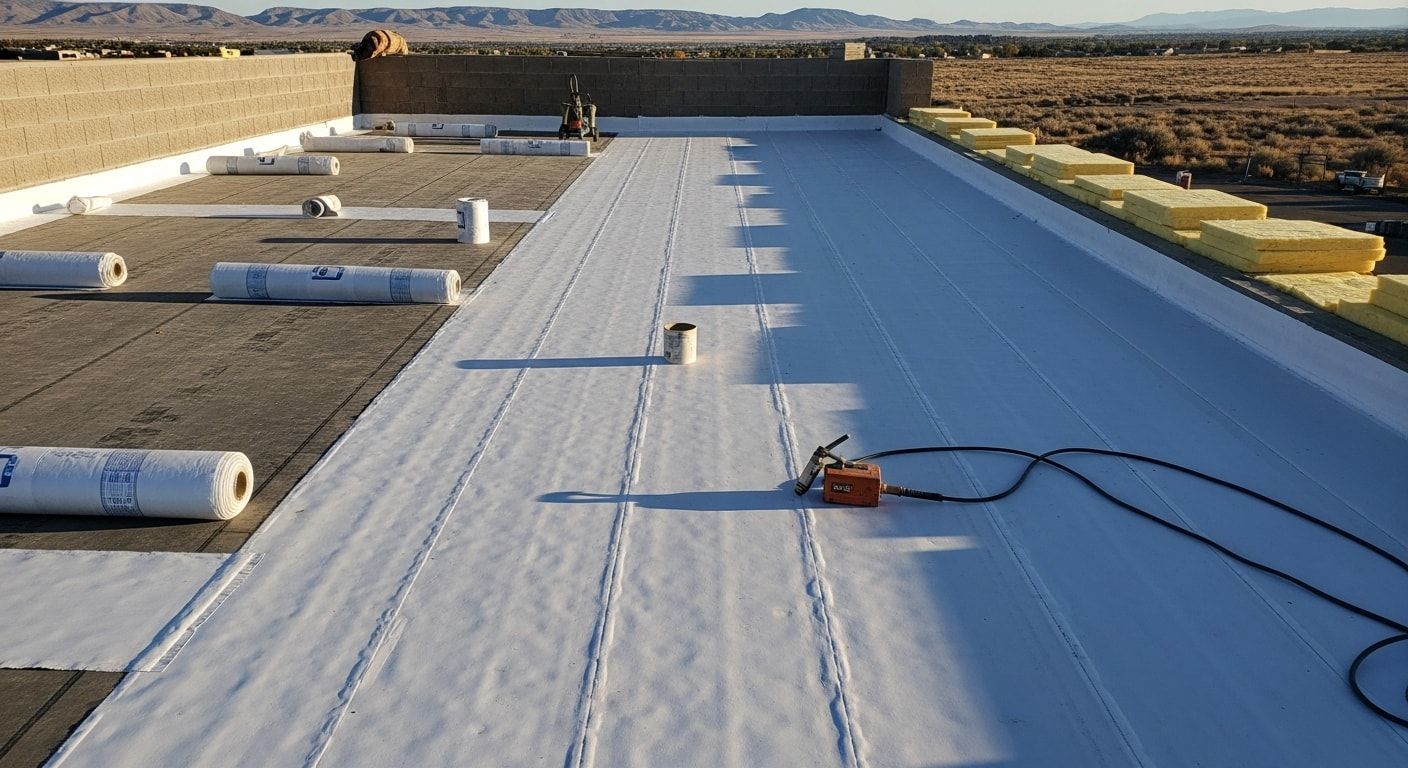
Flat or nearly flat roof sections on residential additions, covered patios, and certain light commercial structures require membrane systems that seal against standing water and thermal expansion instead of relying on gravity drainage like sloped shingle roofs. TPO roofing installed by Lift & Relay Construction LLC creates a continuous weather barrier through heat-welded seams that fuse adjacent membrane sheets into a single watertight surface, eliminating the mechanical fasteners and lap joints where water could penetrate over time. The white or light-colored surface reflects solar heat more effectively than dark materials, reducing the cooling load on the building below and lowering interior temperatures during Terrebonne's summer months.
Proper installation begins with substrate preparation, ensuring that the roof deck is smooth, dry, and free of protrusions that could puncture the membrane, followed by insulation board placement that provides thermal resistance and creates a stable base for the TPO layer. The membrane is mechanically fastened or fully adhered depending on wind exposure and structural requirements, and all seams are welded using hot-air equipment that melts the material surfaces together in a bond stronger than the surrounding sheet. Flashing details at roof edges, penetrations, and transitions to vertical surfaces are fabricated from the same TPO material to maintain system continuity without introducing incompatible sealants or metals.
Schedule an inspection to determine whether TPO installation, repair, or replacement addresses your low-slope roofing needs.
Why Correct TPO Installation Maximizes Performance
TPO systems rely on precise seam welding and proper membrane tensioning to prevent wrinkles, fish mouths, or loose areas where wind can lift the material or water can pool and degrade the surface. Each welded seam is tested for continuity by running a probe along the edge to verify that no gaps exist, and corners receive additional reinforcement patches to distribute stress away from the 90-degree angles where tearing typically initiates. The membrane's flexibility allows it to expand and contract with temperature changes without cracking, and the smooth surface resists ponding water better than textured materials that trap moisture in surface irregularities.
After installation, the low-slope roof stops leaking at seams and penetrations where the previous system failed, and interior spaces below remain dry even during prolonged rain events that would have caused dripping or staining with a compromised membrane. The reflective surface lowers roof temperature by twenty to thirty degrees compared to dark asphalt, measurably reducing attic heat gain and the workload on air conditioning systems. You'll also notice that the roof surface remains cleaner because the smooth TPO membrane doesn't retain dirt and organic debris the way granulated shingle surfaces do.
Repair options for TPO systems include patching small punctures or tears with heat-welded reinforcement, re-securing loose membrane areas, and replacing damaged sections when localized failures occur before the entire system reaches end-of-life. Replacement becomes necessary when the membrane shows widespread cracking, when shrinkage has pulled material away from flashing details, or when the underlying insulation has degraded and no longer provides the required thermal performance. Service extends to qualifying residential structures with flat additions and light commercial properties where low-slope roofing is the primary weather protection system.
Questions Before Starting Your Project
Property owners with low-slope roofing often want clarity on material differences, installation techniques, and maintenance expectations.
What makes TPO appropriate for low-slope roofs where shingles won't work?
TPO creates a continuous sealed surface that remains watertight even when water stands on the roof for hours, whereas shingles depend on steep slopes to shed water quickly and will leak if installed on pitches below the minimum drainage angle specified by manufacturers.
How are seams welded and why does that matter for long-term performance?
Seams are fused using hot-air welding equipment that heats both membrane edges until they melt together, creating a molecular bond that eliminates the gaps present in glued or taped seams where adhesive can fail over time due to UV exposure or thermal cycling.
Can TPO be installed over existing low-slope roofing or does the old membrane need removal?
Installation over existing materials is sometimes possible if the substrate remains sound and adding another layer won't create drainage problems, but most quality installations involve tear-off to inspect the decking, verify insulation condition, and ensure proper adhesion of the new membrane to a clean surface.
What does TPO maintenance involve to keep the system performing through its expected lifespan?
Maintenance includes annual inspections to check seam integrity, clearing drains and scuppers so water doesn't pond longer than necessary, and removing debris that could puncture the membrane or trap moisture against the surface where it accelerates degradation.
How does Central Oregon's climate affect TPO roofing compared to other regions?
The high desert environment's intense UV exposure and wide temperature swings between day and night test the membrane's flexibility and fade resistance, making proper material selection and installation technique critical to achieving the twenty-plus year service life these systems are designed to provide.
Lift & Relay Construction LLC applies TPO roofing using heat-welding techniques and flashing details that address the specific challenges of low-slope applications, ensuring that your flat or nearly flat roof sections perform as reliably as the sloped areas. Request an evaluation to assess your current membrane condition and discuss whether repair, coating, or full replacement provides the best long-term value for your property.